

How to Get an ESA Letter: A Step-by-Step Guide
- Published on:
- By: ASP Team
To get an ESA letter, you need an evaluation from a licensed professional who decides whether an emotional support animal (ESA) is appropriate for you. If they conclude it is, they may write and sign a letter. You can ask a provider you already see, or use a service that connects you with a provider licensed in your state.
An ESA letter is a signed document supporting your disability-related need for an emotional support animal, most often used for housing. It isn’t a registration or a certificate.
Key takeaways
- A licensed provider evaluates you and makes the decision. No one can promise a letter.
- You can ask your own doctor or therapist, or use a telehealth service. Either way, you need an individual evaluation by a provider licensed in your state.
- Timing depends on the provider and your state, and a few states require a waiting period first.
- Registries, certificates and ID cards don’t replace a letter.
Get Your ESA Today

Who may be a candidate for an ESA letter
There’s no official list of conditions that “count.” A licensed provider looks at your individual circumstances: what you’re experiencing, how it affects your daily life, and how an animal’s support helps.
Providers commonly evaluate ESA requests related to anxiety, depression, PTSD, panic disorder and phobias. A diagnosis alone doesn’t mean a provider will recommend an ESA, and you don’t have to work out your own eligibility before you start.
How to get an ESA letter in 5 steps
- Decide whether an ESA is right for you.
- Choose your route: your own provider or a telehealth service.
- Complete an evaluation with a provider licensed in your state.
- Let the provider decide whether to recommend an ESA.
- Receive your letter, if one is provided, and keep a copy.
1. Decide whether an ESA is right for you.
Think about what you hope the animal will help with and whether you can care for one, including time, cost and your housing rules. ESAs don’t need special training. If you already have a pet, you can move straight to step 2.
2. Choose your route.
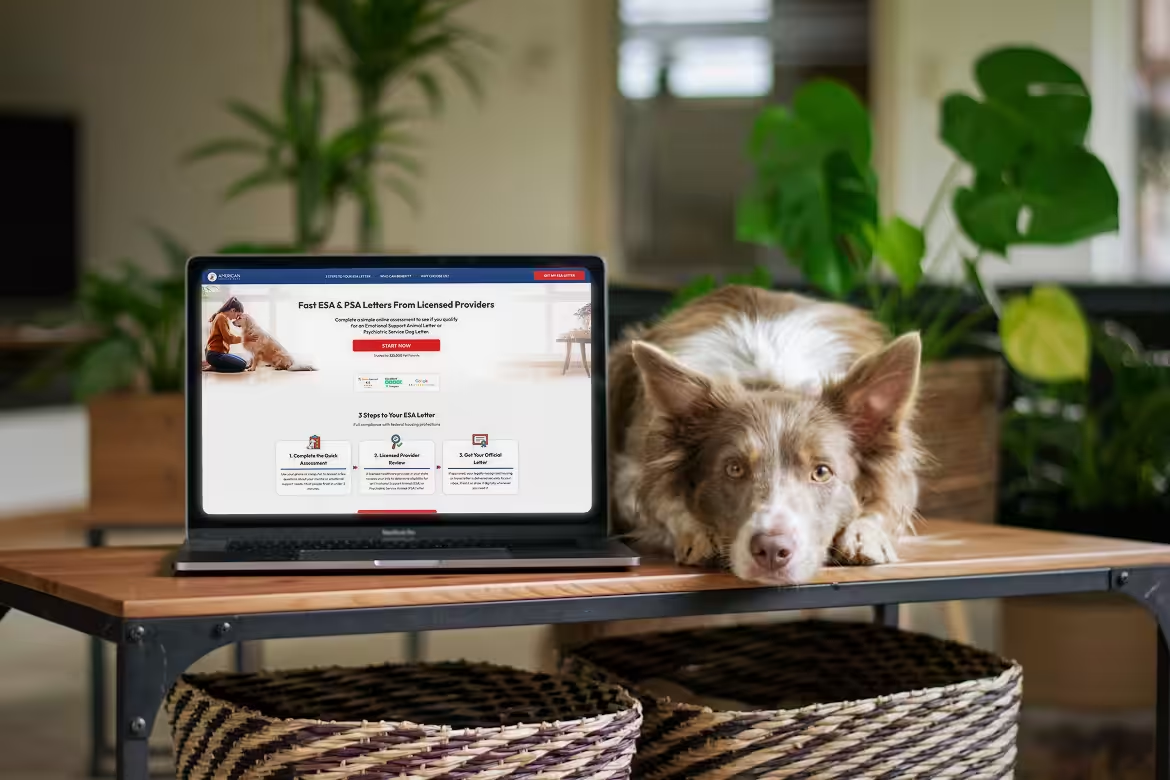
You can get an evaluation from a provider you already see, or through a telehealth service, like American Service Pets, that connects you with a licensed provider online.
3. Get evaluated.
A licensed provider reviews your history and how your symptoms affect daily life. The provider must be licensed in your state.
4. Let the provider decide.
The provider determines whether an ESA is clinically appropriate and whether to write a letter. If they decide it isn’t, no letter is provided. That’s a clinical call, not a verdict on you.
5. Receive and keep your letter.
Save a copy and check that it includes the provider’s name and credentials; their license type, number and state; the date; and the provider’s signature. If anything is missing, ask your provider to correct it. There’s no single universal template.
Option 1: Get an ESA letter from your own doctor or therapist
If you already see a therapist, psychiatrist or primary care provider, start there. They know your history, and that context can make an evaluation more straightforward.
Here’s a script you can use:
“I’d like to talk about whether an emotional support animal could help with [what you experience]. Is that something you can evaluate and document if it’s appropriate?”
Before the appointment, write down how long this has been going on, how an animal helps or would help and your housing situation. Your provider can work with specifics far more easily than with a general request.
Be ready for a few bumps, though:
- Not every provider does this. Some don’t write ESA letters at all, whether because of their practice policies, their comfort level with housing documentation, or their scope of practice. If yours says no, it isn’t a judgment about you.
- Appointments can take a while. Your provider’s next opening may be weeks out, and ESA requests often get squeezed into a regular visit that was booked for something else.
- They may not know what a landlord needs. Housing documentation has its own expectations, and a general note on a prescription pad may not give your landlord what they’re looking for.
- Insurance may not cover it. Ask your provider about the cost, and whether insurance covers it, before you book.
- State rules still apply. Providers in some states have to meet requirements before documentation can be provided, and your provider may not be set up for that.
If your provider is open to it, this route can work well. If you hit a wall, you haven’t done anything wrong. That’s when a telehealth service is worth a look.
Option 2: Get an ESA letter through American Service Pets
American Service Pets (ASP) is a telehealth platform that connects patients with Licensed Mental Health Professionals (LMHPs) in the patient’s state. American Service Pets doesn’t diagnose you or make the clinical decision. The provider does, using independent professional judgment.
The process is designed to make it easier to get an evaluation and to remove much of the friction in Option 1.
You don’t have to call around.
Many offices don’t take ESA requests, and finding one that does can mean a lot of phone calls. With ASP, your request goes straight to a licensed provider in your state who will review it.
You’re matched with a provider licensed in your state.
That matters for legitimacy and for state-specific rules. You don’t have to check credentials yourself or guess whether your provider can legally evaluate you where you live.
You can do it from home.
You start with a secure online health assessment, and then your provider reviews your information. No waiting room, no travel, no taking time off to squeeze in an appointment.
The process is laid out up front.
You’ll know what to expect from the health assessment to the provider’s review, instead of figuring it out as you go.
You get documentation shaped for housing.
If your provider recommends an ESA, they can provide documentation designed with a housing accommodation request in mind.
Support along the way.
Questions about the process? Contact ASP’s support team.
If that sounds like the route you’re looking for, you can start your health assessment. We’ll connect you with a licensed provider, and the provider decides.
How to spot a letter mill
Whichever route you pick, watch for these:
- Instant or guaranteed approval
- No evaluation by a licensed provider
- “Registration” or “certification” sold as what makes your ESA legal
- A provider who isn’t licensed in your state
- “Lifetime” letters
A legitimate service tells you plainly that a provider decides, and that the outcome isn’t guaranteed. ASP’s process is built around that: a health assessment, a licensed provider in your state, and a recommendation only when it’s clinically appropriate.
Which route is right for you?
Start with your own provider if you have a good relationship with a therapist or doctor who’s willing to evaluate you and can see you soon. Consider ASP if you don’t have a provider, yours doesn’t write ESA letters, you’re on a move-in or lease deadline, or you’d rather complete the process online.
You aren’t locked in either way. Plenty of people ask their own provider first and go the telehealth route if it doesn’t work out.
Frequently asked questions
Can I write my own ESA letter?
No. It has to come from a licensed professional who has evaluated you.
Are online ESA letters legal?
Yes, when a licensed provider in your state evaluates you. A form that produces an instant letter with no provider review isn’t a legitimate evaluation.
Can my doctor write an ESA letter?
Possibly. Many licensed providers can evaluate you and write a letter if they find an ESA clinically appropriate, but some choose not to. If yours doesn’t, you can connect with a licensed provider through American Service Pets.
Do landlords check ESA letters?
Yes, landlords can ask for reliable documentation when your disability-related need isn’t obvious, and many verify the provider’s license with the state board or contact the provider directly. Some use a third-party verification service. Make sure your letter lists the provider’s name, license type, license number and state, and that the provider is reachable.
Do I need to register my ESA or get emotional support dog certification?
No. There’s no federal ESA registry, and registration, certification or ID cards don’t replace a letter from a licensed provider. American Service Pets offers ID cards, tags and vests as optional accessories, but they don’t give your animal any legal status.
How long does an ESA letter last?
There’s no single federal expiration date. Landlords often want a recent letter, and many even require you to renew yours yearly. See how long an ESA letter lasts.
Ready to start?
Begin your assessment and we’ll connect you with a licensed professional in your state. Your provider decides whether an ESA is recommended.
Licensed professionals · Secure online process · Documentation provided if recommended
Related Reading

The benefits of an Emotional Support Animal certification and a Psychiatric Service Dog certification are drastically different. Fortunately for you, American Service Pets’ network of active board certified doctor or other licensed mental health providers can help you find the right path to certification. To find out whether you need an ESA or PSD letter, take our easy, three-step Pet Owner Survey!
More Great Resources